Education 718-Landscapes of Practitioner Inquiry Coursework
Performative Research Methodology Presentation
Instructor Feedback:
Hi Crystal,
Thank you for this self-reflection, it is really thoughtful and insightful. I noticed how detailed and well researched your presentation was when I visited your group. I could tell how much work had gone into preparing this - thank you for going "all in" on this work! I'm glad you enjoyed the experience, and I could see your group was also engaged and certainly benefited from the work you put into this. Well done!
Grade: 23/25
Dr. Christine Paget, June 26, 2025
Critical Evaluation of Research
Article “How Arts Integration Supports Student Learning: Students Shed Light on the Connections” By Karen DeMoss & Terry Morris (2002)
Instructor Feedback:
Hi Crystal,
Summary and analysis – this assignment demonstrates a clear understanding of the research article and its structure. The assignment includes a discussion of all the key elements of the article. Course concepts are applied with excellent understanding and depth.
Evaluation – this assignment provides a critical and in-depth evaluation of all of the elements of the article. The assignment applies course concepts in an insightful and critical manner to the evaluation. The assignment discusses the strengths and weaknesses of the article in a carefully considered manner.
Academic practices and skills – the assignment follows assignment directions and includes all required elements. Principles of academic integrity and APA conventions are correctly applied. The work is of high quality.
Overall - This is an excellent critical analysis that identifies and critically evaluates all major elements of the methodological process in the chosen research article. The work further references course concepts in an accurate and appropriate manner to support the analysis.
Grade: 24/25
Christine Paget, July 23, 2025
Draft Practitioner Inquiry Proposal
MEd Practitioner Inquiry Proposal Powerpoint Presentation.pptx
Crystal Smith Practitioner Inquiry Draft Proposal Self-Reflection.docx
Revised MEd Practitioner Inquiry Proposal.pptx
Instructor Feedback:
Thank you for this detailed self-reflection - I'm excited to read the final proposal!
Dr. Christine Paget ~ August 10, 2025
Grade: 15/15
Finalized Practitioner Inquiry Proposal
Practitioner Inquiry Proposal.docx
Final Practitioner Inquiry Self-Reflection.docx
Instructor Feedback:
This is an extremely well-developed proposal (I think it's still a bit big...!), but it is comprehensive and organized. A couple of suggestions:
The theory should help you articulate themes for your analysis - how can the theory guide your codes in analysis?
Your bibliography is not quite in APA format - the indentations are missing. Are you using Mendeley or Zotero? Maybe just have a quick peek at the settings to make sure you're set up for APA.
Dr. Christine Paget ~ August 12, 2025
Course Participation & Self-Evaluation
Crystal Smith EDUC 718 - Class Participation Self- Evaluation Form.docx
Instructor Feedback:
Thank you for this self-reflection. I appreciated your positive contributions in both the large and small group formats in this class.
Dr. Christine Paget ~ August 9, 2025
Grade: 9.5/10
Education G011 Inquiry into Practice Coursework
Postcard “Stop or Tug on the Sleeve” Moments
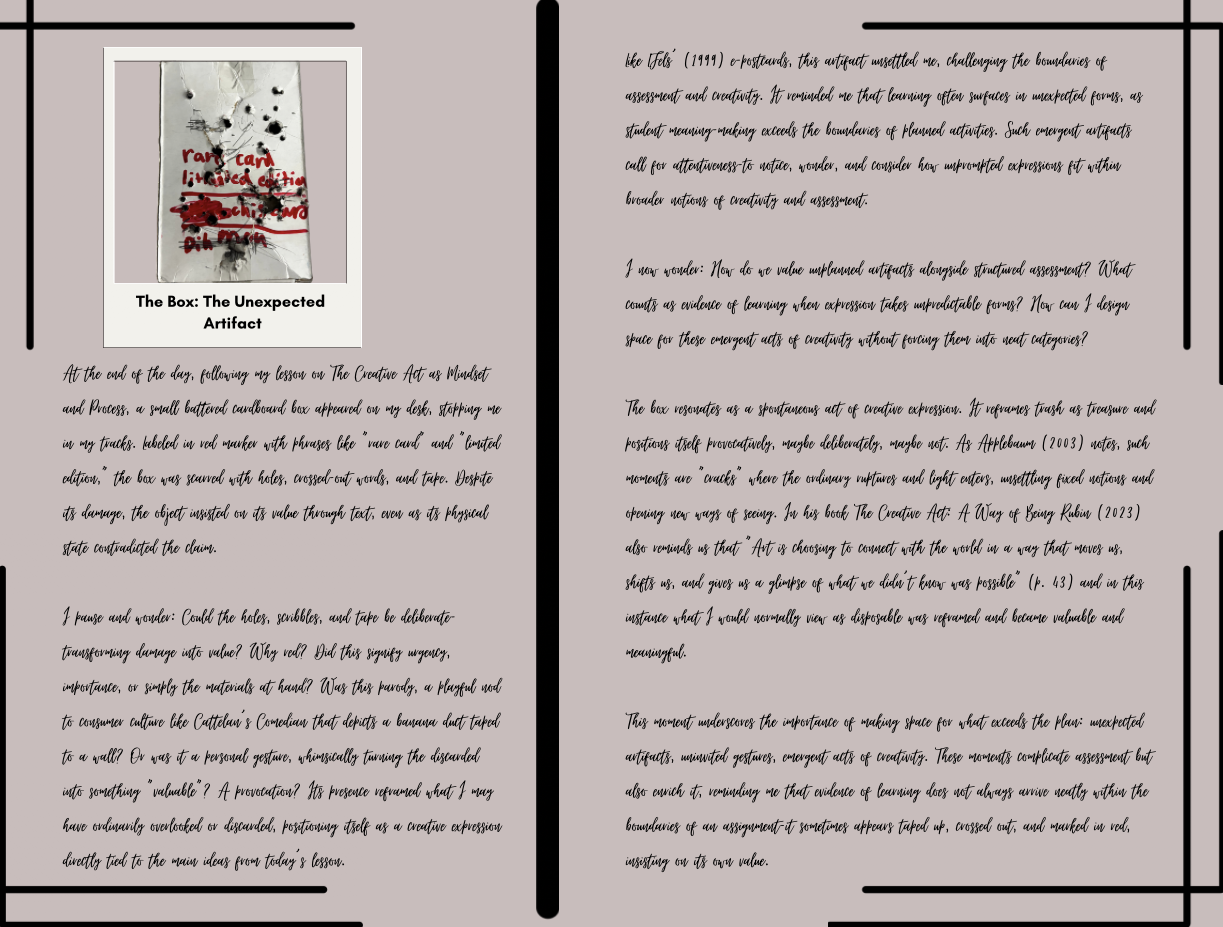
Instructor Feedback Postcard # 1
"...unexpected artifacts, uninitiated gestures, emergent acts of creativity....learning ...sometimes appears taped up, crossed out, and marked in red, insisting on its own value."
Crystal, I absolutely loved your offering of the box as a calling to attention, that moment when what was expected did not arrive, but something that had not yet been imagined appeared on your desk...and your welcome of the artwork as an opportunity of all the possible offerings the box offered, as it tugged on your sleeve. Reminds me of Derrida's quote about the unexpected stranger as not being the stranger that was expected, but rather one that one had not expected, that calls us to question our own response/resistance/surprise...calls us to look again, as you have so beautifully!
With gratitude,
Lynn
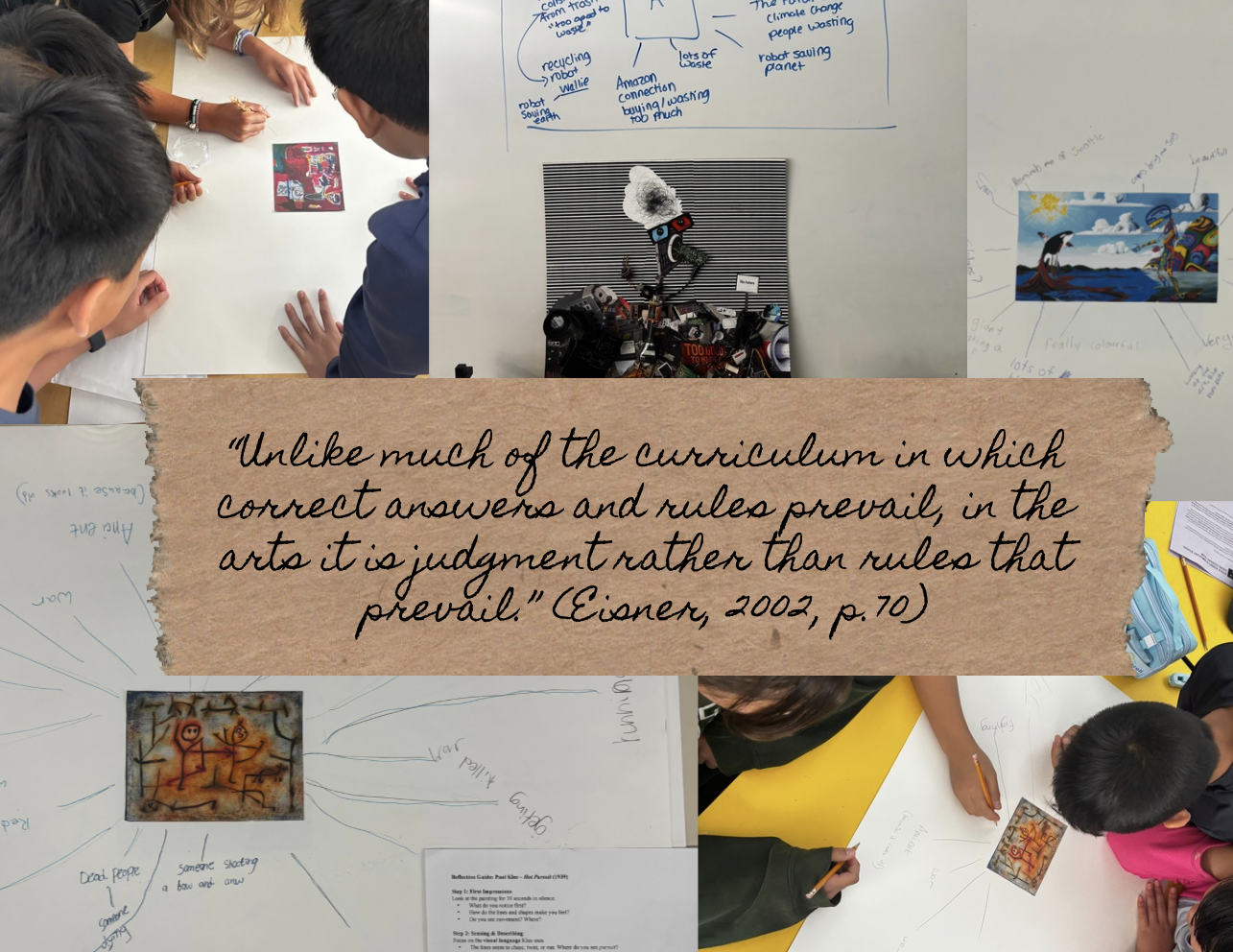
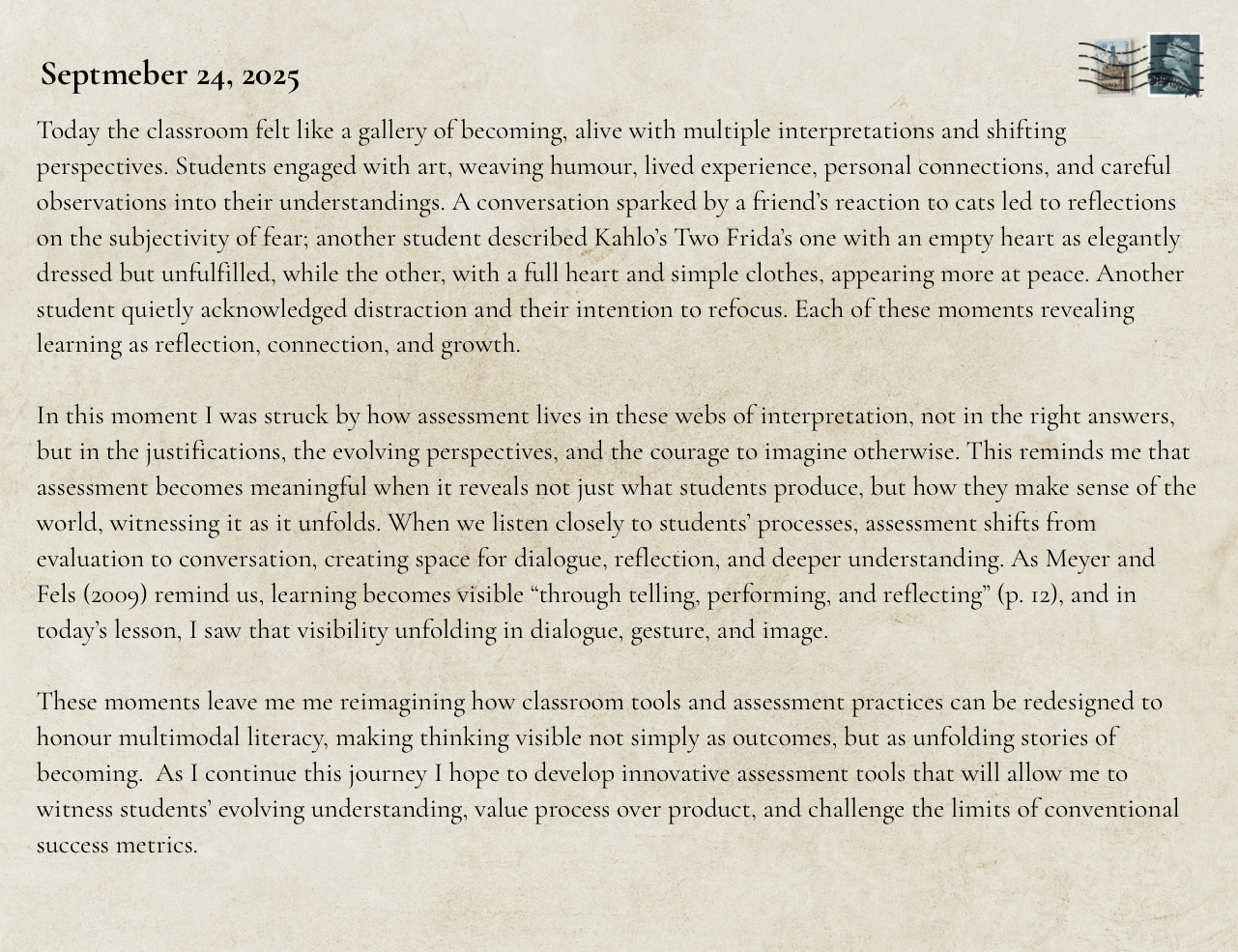
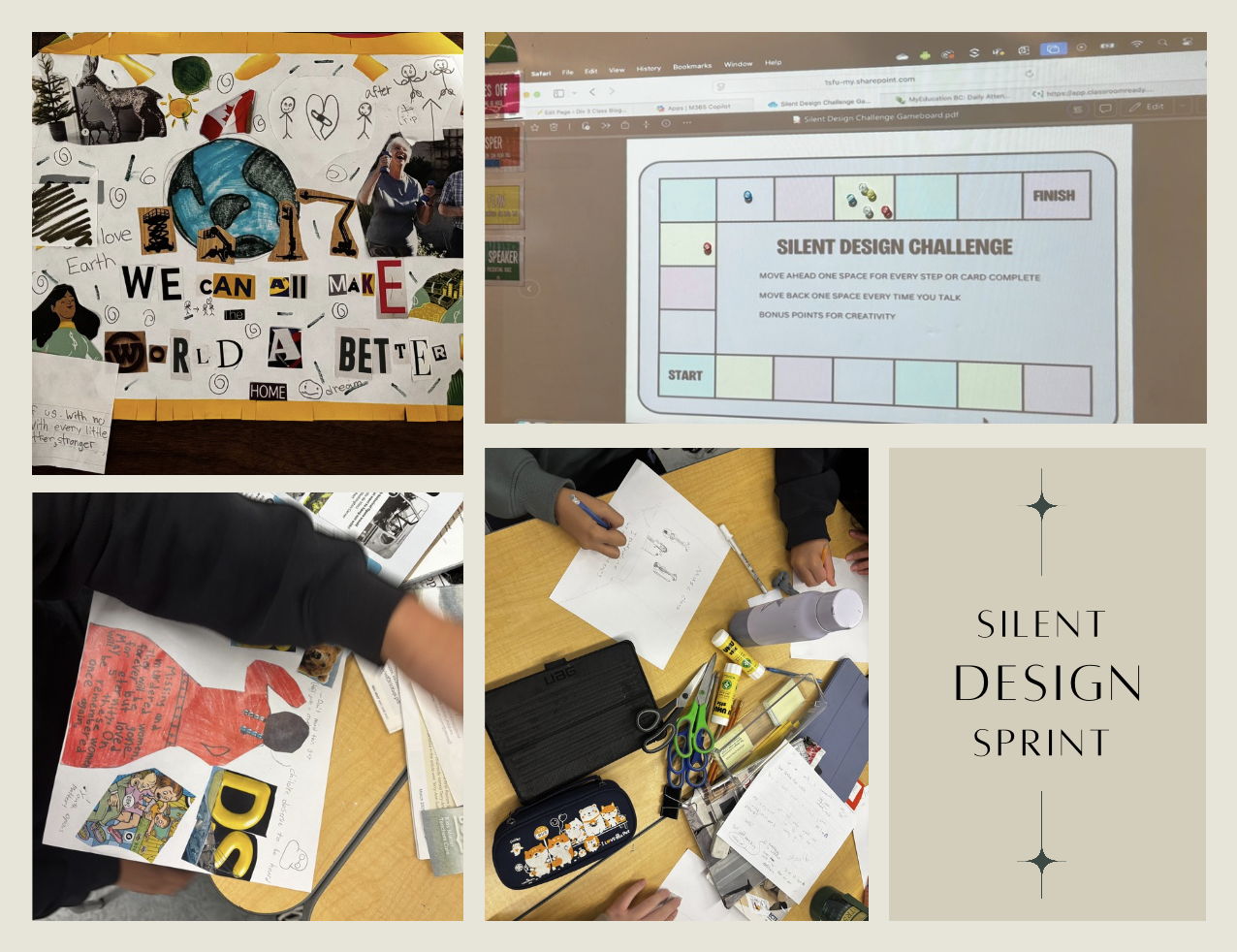
Instructor Feedback for Postcard # 3
Your postcard 3 with thanks!
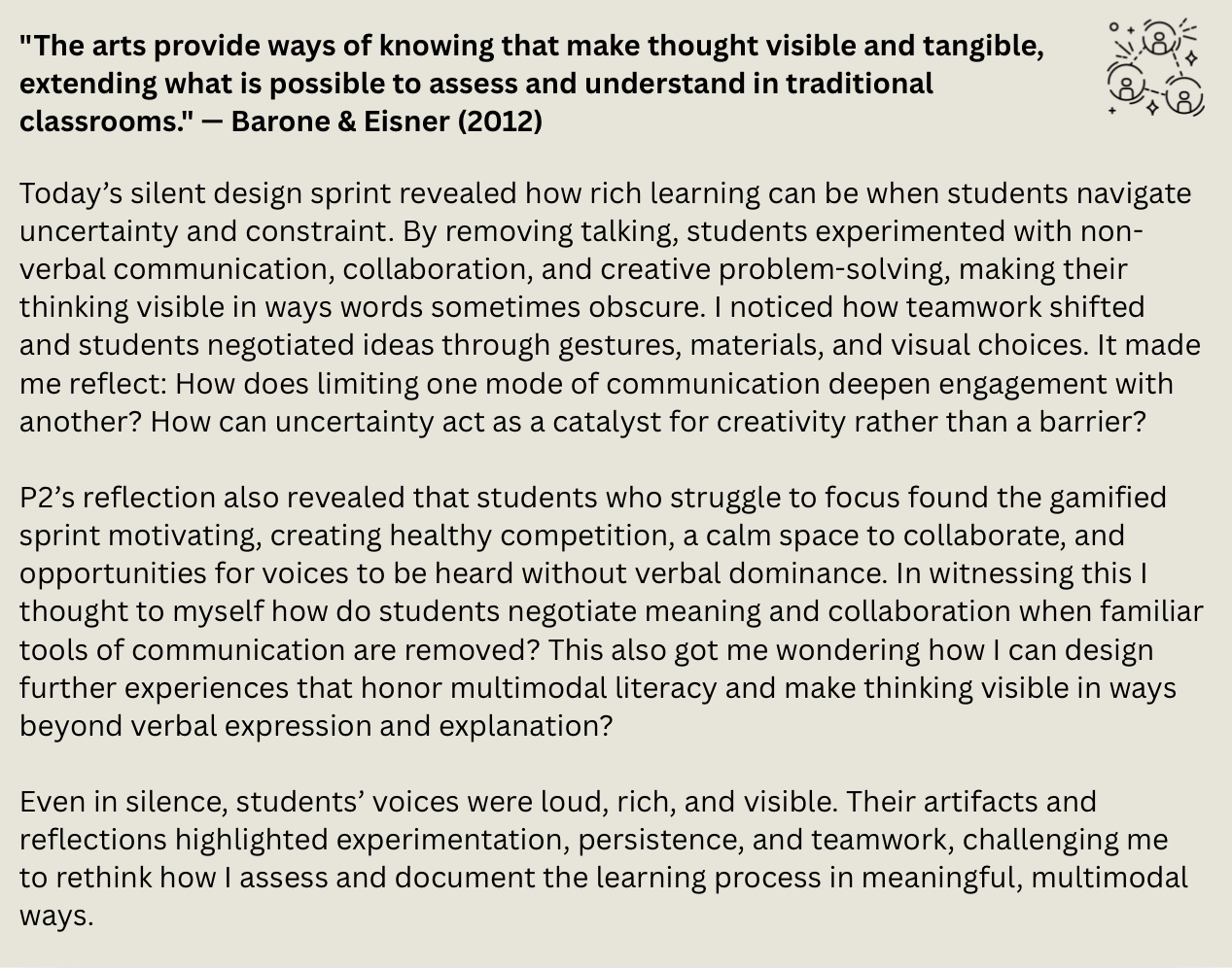
"Even in silence, students' voices were loud, rich, and visible."
What wonderful listening you are doing, Crystal, as a researcher, in your inquiry. Excellent questions, as you recognize the multimodal literacy undertaken by your students, once the dominance of voice and explanation is removed...I love your question: "How can uncertainty act as a catalyst for creativity rather than a barrier?" And I love that you are rethinking how you rethinking how to assess and document learning in new ways. Have I mentioned Michelle Searle to you (Queen's University)? She does arts-based assessment and evaluation. There's also a chapter on evaluation in the book pdf I sent everyone, that considers different strategies. It's wonderful how much you can share of your learning as a researcher in a single postcard! Bravo!
With care,
Lynn
11/12/2025
Instructor Feedback for Postcard # 4
Your postcard 4 with thanks!
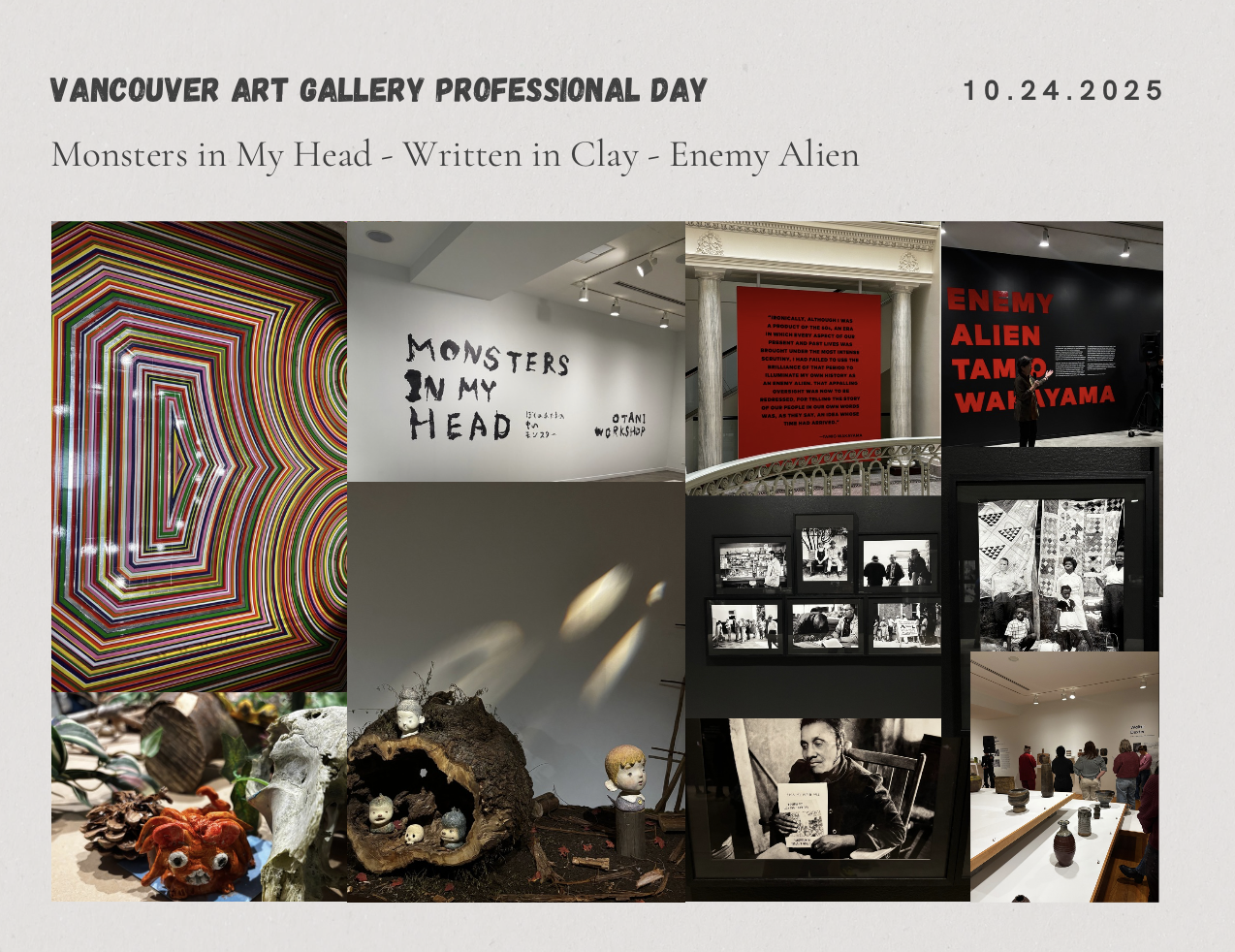
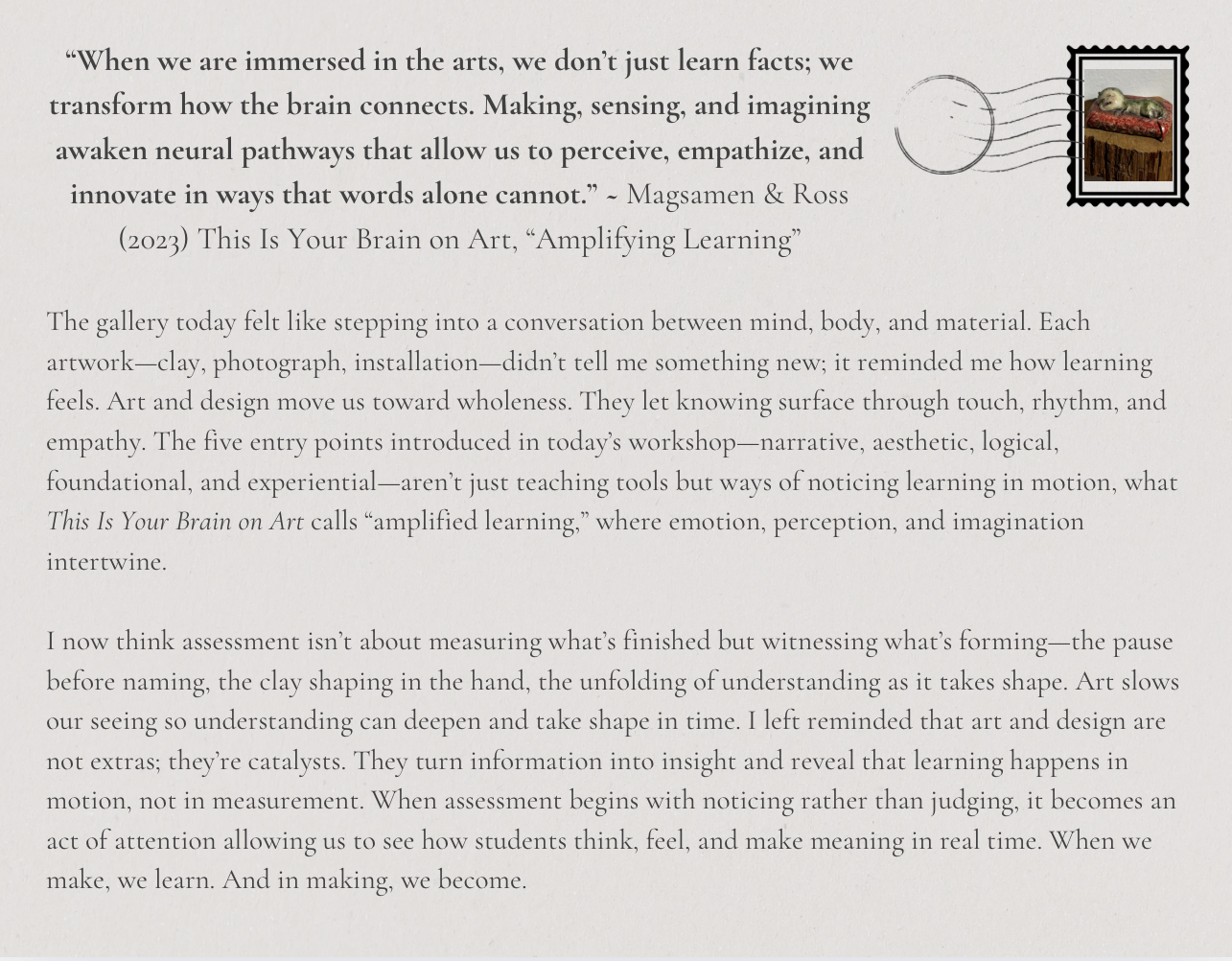
"...art and design are not extras; they're catalysts....learning happens in motion."
Crystal, I'm standing up, clapping, a standing ovation! beautifully expressed, and so needed in these times when budgets are reducing, erasing the arts. I love how you speak of assessment through arts and design and artmaking as "ways of noticing learning in motion...where emotion, perception and imagination intertwine" within which is embodied creative critical engagement with what matters, what arises, what we make, "And in making, we become." "I now think assessment isn't about measuring what's finished but witnessing what's forming - the pause before naming, the clay shaping in the hand, the unfolding of understanding as it takes shape." Your understanding takes my breath away...."an act of attention" - how do we learn to see with our hearts, rather than judge by criteria that makes invisible the offering?
With gratitude,
Lynn
11/13/2025
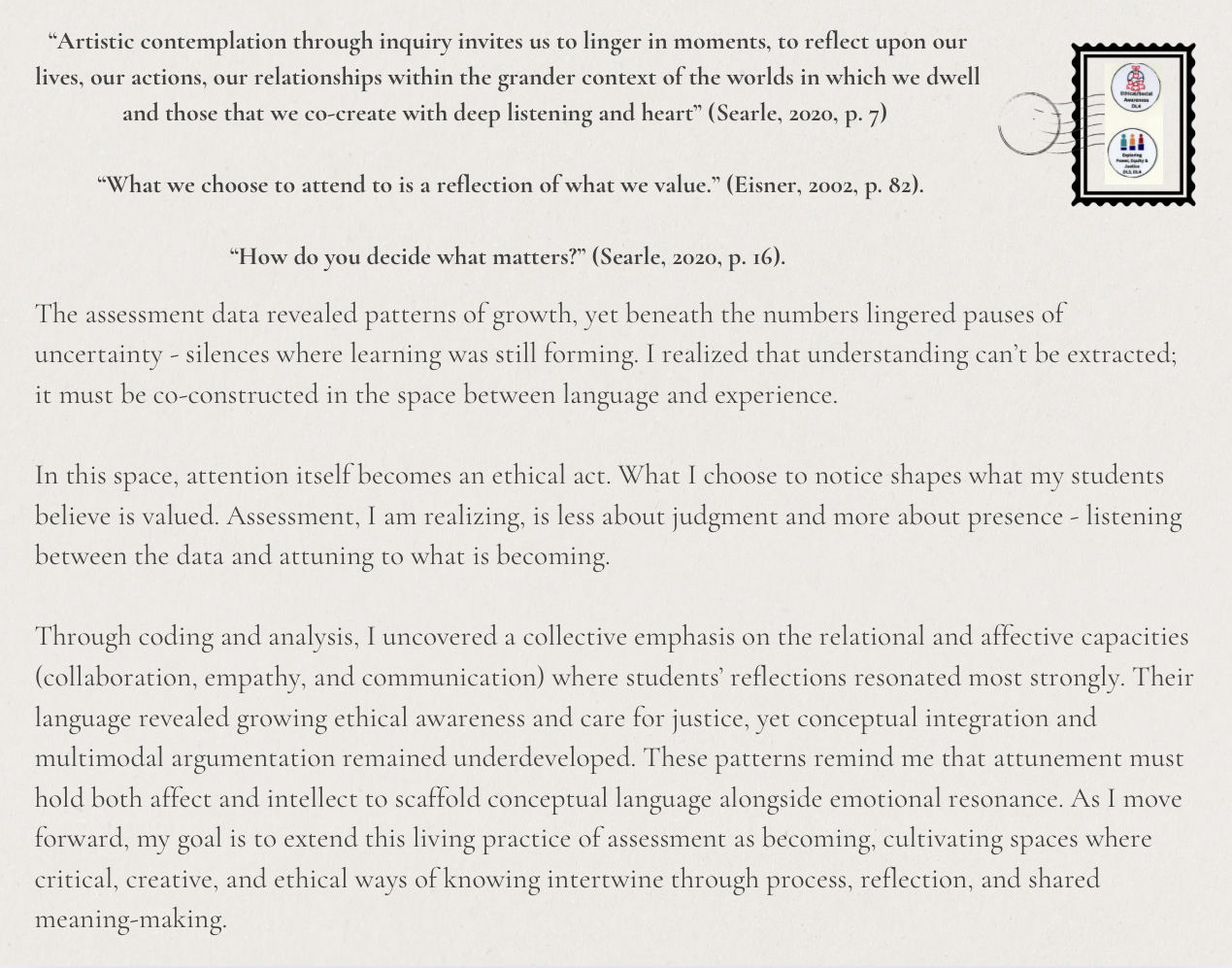
Instructor Feedback Postcard #5
"What I choose to notice shapes what my students believe is valued."
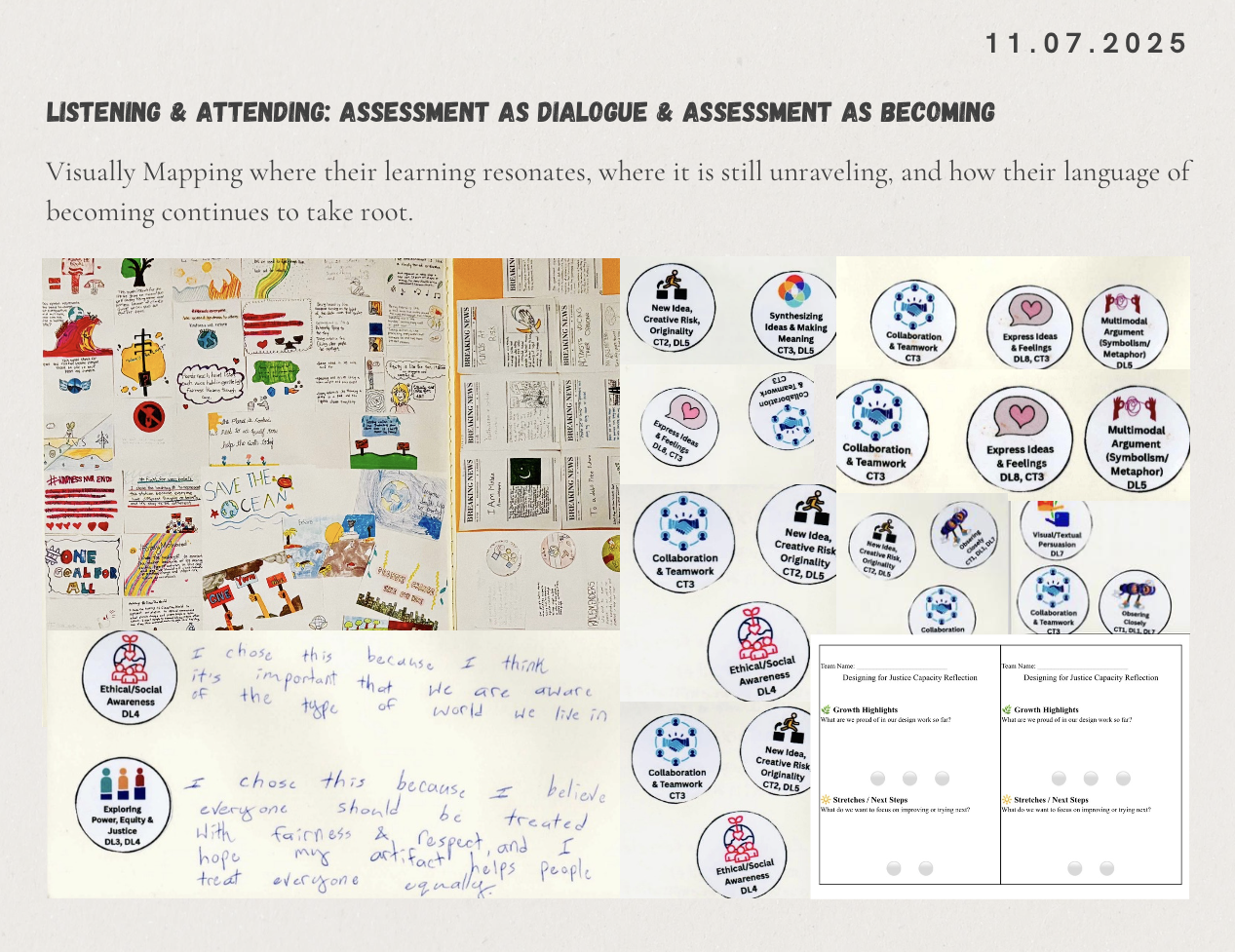
Powerful words, Crystal, and why do I choose what I choose to notice? What matters? I honestly didn't know what quote to begin my response to your insightful exciting journey into the relational ethics and experience of a "living assessment" - "this living practice of assessment as becoming, cultivating spaces....Amazingly, the defence I spoke about on Thursday was on reassessing assessment...if you like I can contact her Senior Supervisor to get her contact to ask her if I could send you a copy of her dissertation. You and she are on the same wave length! I love your concept of a living practice of assessment....one thing I am wondering about...the word "process". What if you are cultivating spaces of experience....through action, reflection, and shared meaning-making and action? "Attunement must hold both affect and intellect to scaffold conceptual language alongside emotional resonance - thus the need for experience to be incorporated... "Attention becomes an ethical act." Yes!! Does your emergent understanding of "living assessment" incorporate First Nations Principles [and Practices] of Learning and Ethics (relevance, respect, reciprocity, relationship)? You are teaching your students to notice, to come to attunement, a lifelong journey and challenge....meta-cognition of one's learning is a valuable gift that will journey with your students through their lives. Crystal, your inquiry of assessment is simply amazing! Here's a wondering, where are you on your visual map? Your language and moments of becoming in ethical relationship? (embodied within your work, yes, and as a learner?)
With care,
Lynn
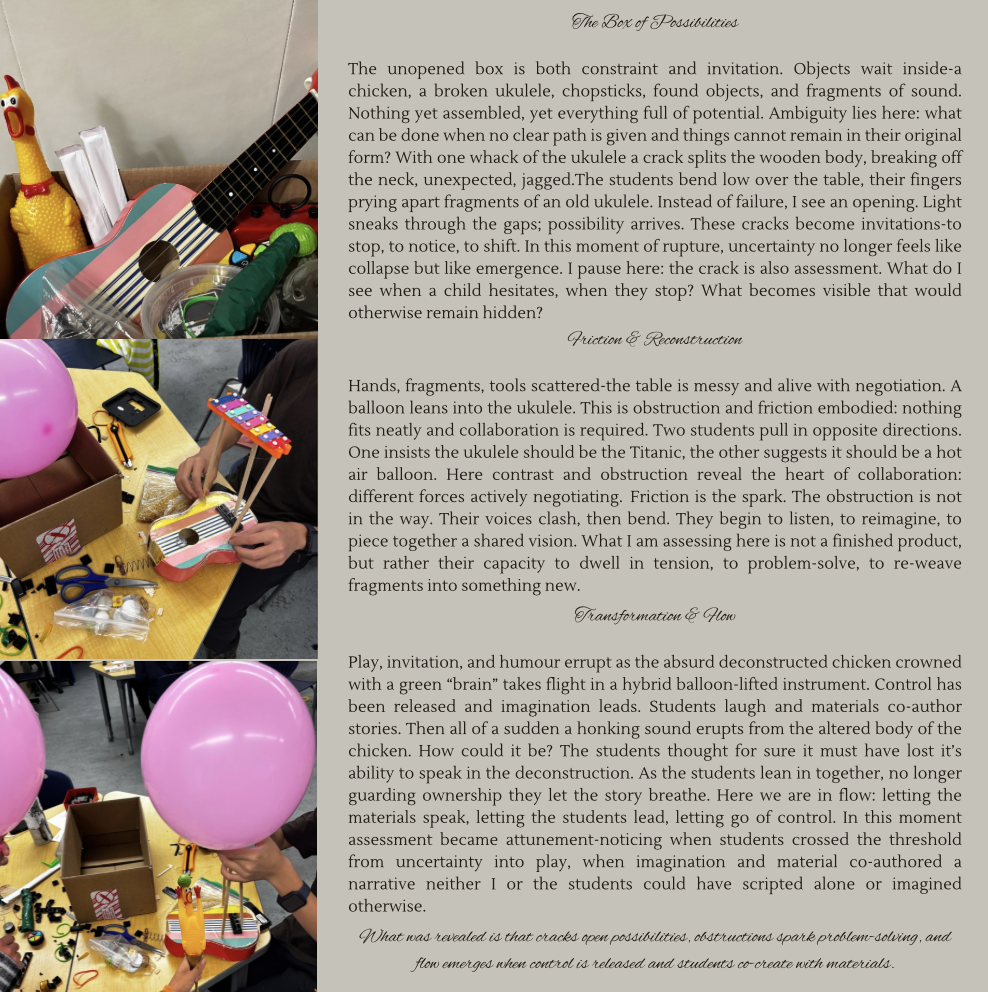
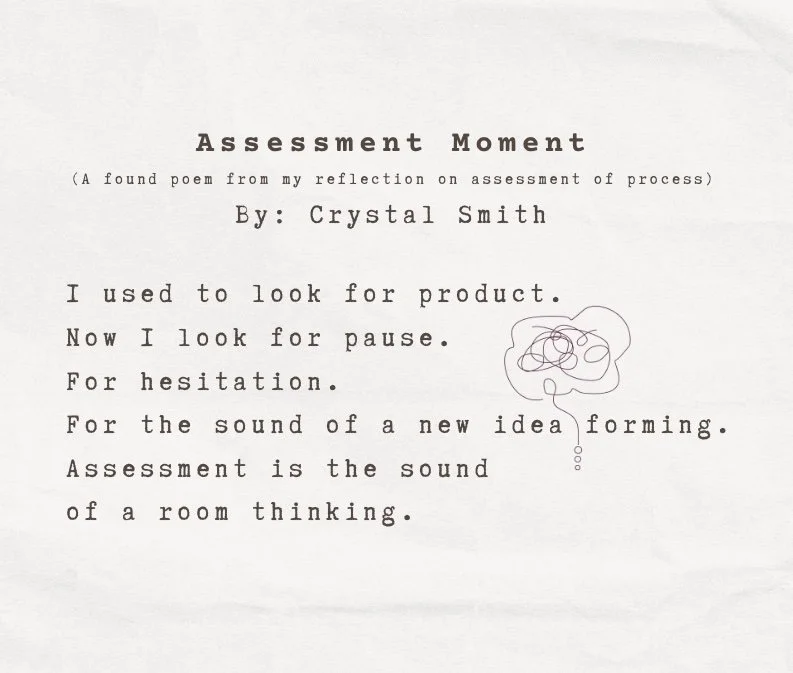
Poetry Cafe
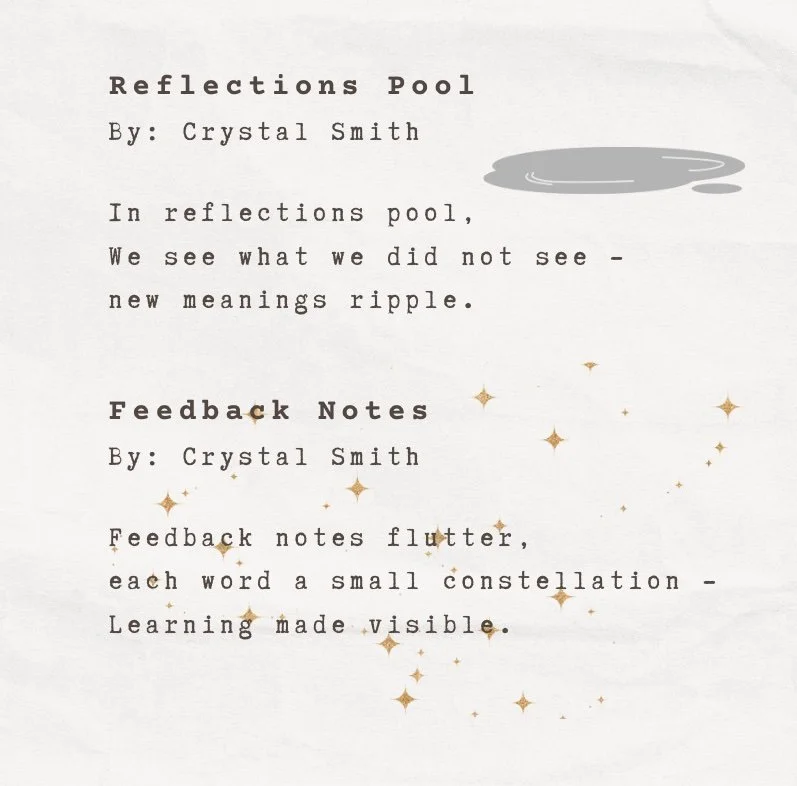
Art Gallery
Visual Mapping of Inquiry
Noticing Statement Expanded Visual Map
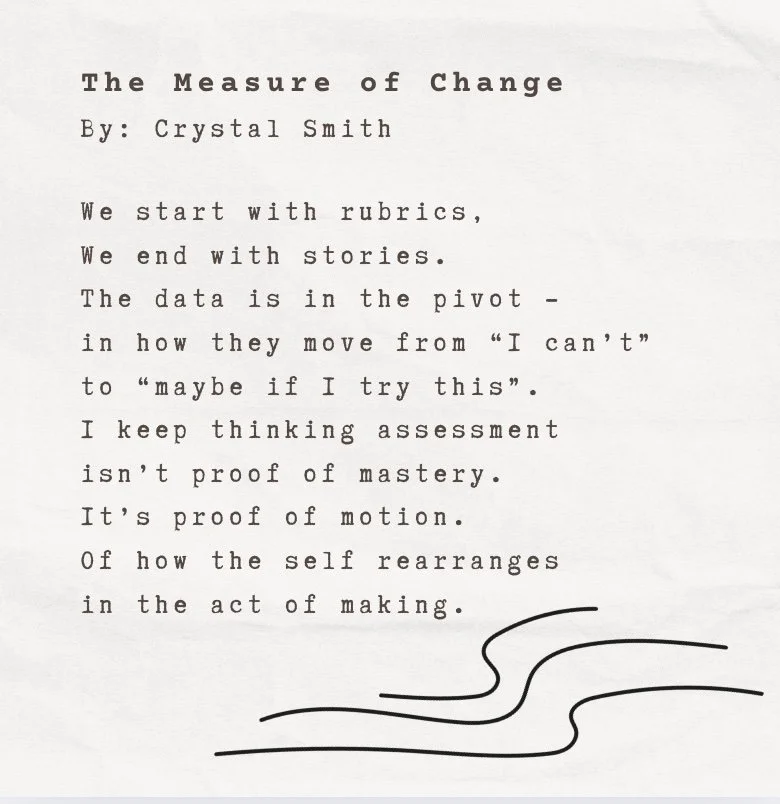
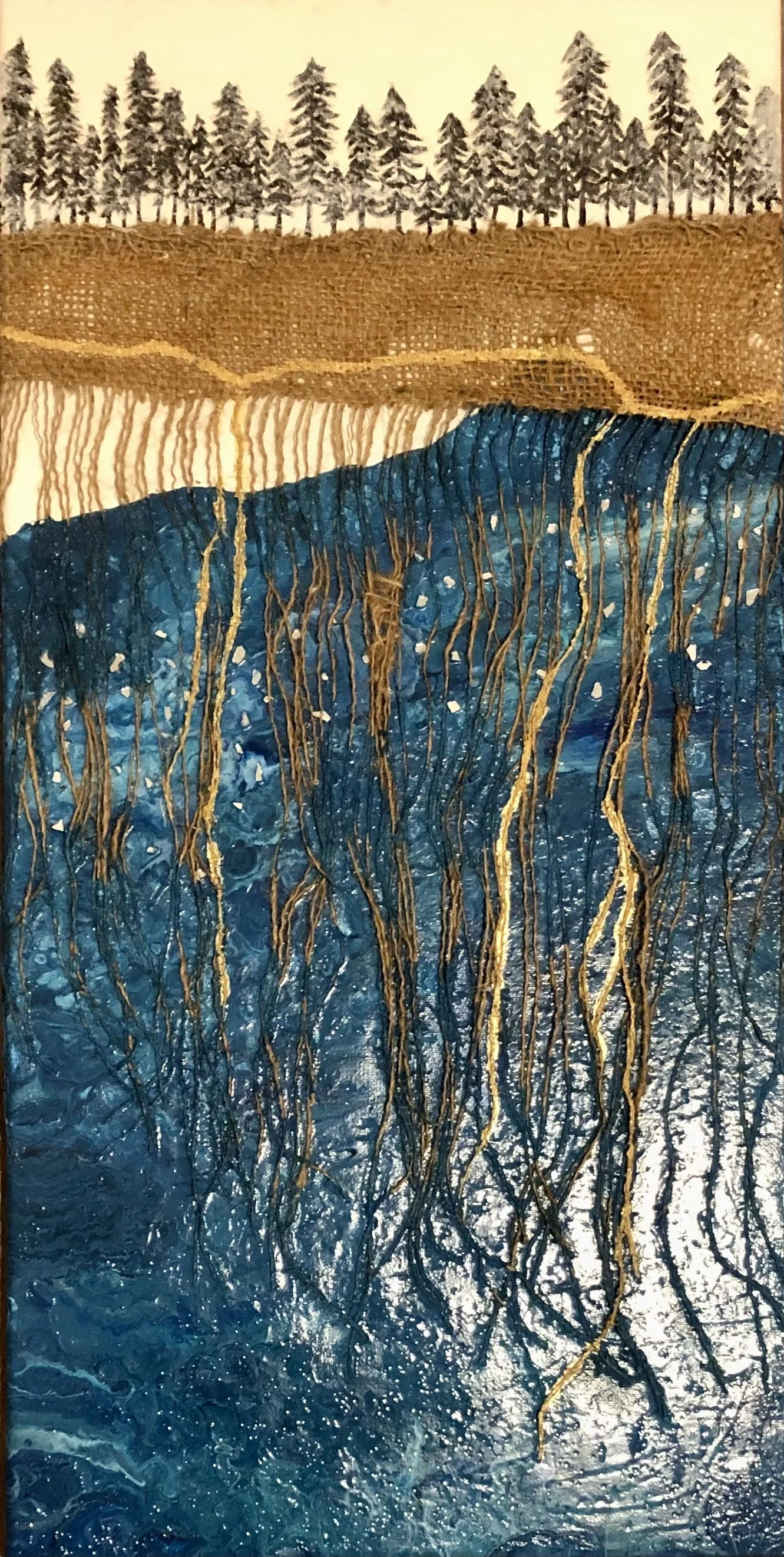
Rupture and Resonance: Traces of Becoming/
Mixed Media on Acrylic Panel: Jute, Acrylic Pour, Glass, Kintsugi
Crystal Smith
Roots reach into shifting water, carrying the traces of our shared learning. Some remain submerged, unseen; others stretch outward, exposed to air and light. In their movement, I see the layered processes of multiliterate meaning-making—fluid, relational, and unfinished.
Beneath the surface, small rocks gather where roots meet friction. These moments of contact feel like necessary anchors of becoming—the quiet stabilizers entangled within growth itself.
The fog holds this in-between space, where reflection and uncertainty meet. Here, assessment is not about clarity but about attending to what resonates, what lingers, what is still forming.
Cracks glimmer through the surface, mended with gold like kintsugi—marks of mistakes embraced, of growth emerging from rupture. Each fracture lets light in, revealing the beauty of process and the vitality of imperfection.
The glass reflects and refracts, folding the viewer into the work itself. It reminds us that reflection is both mirror and lens, that learning happens through relation.
In this living ecology of roots, water, fog, and reflection, assessment becomes not a measure of mastery, but an act of witnessing transformation—of seeing becoming made visible.

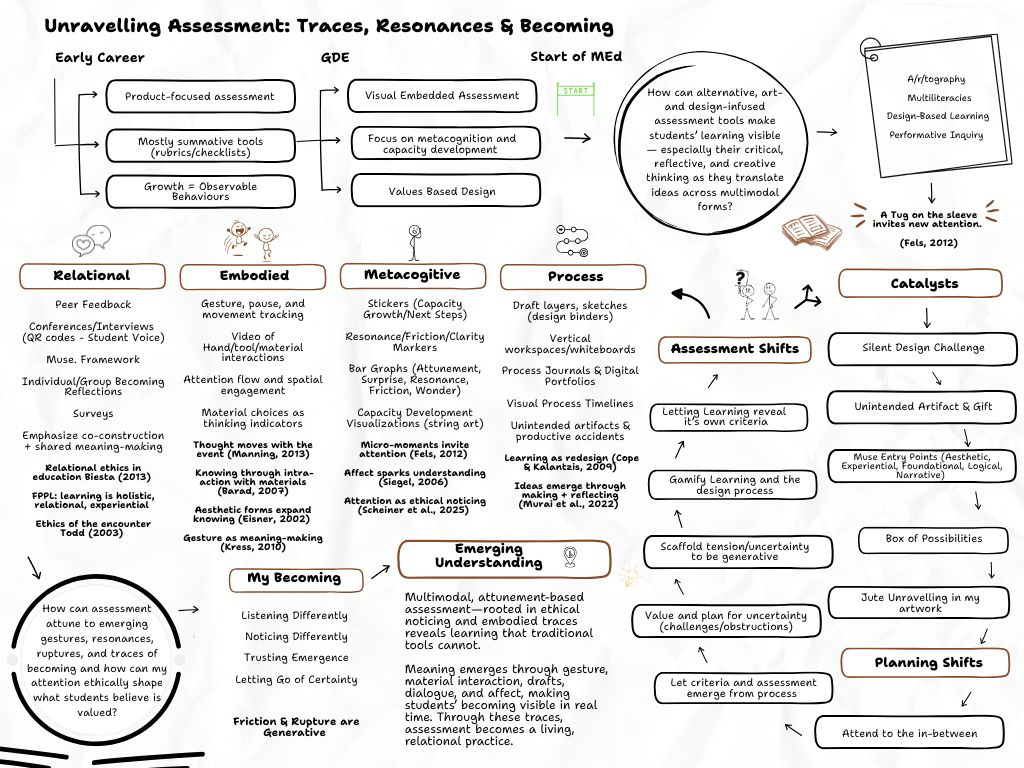
Unravelling Assessment Inquiry Presentation
A “Tug on the Sleeve Moment”: The Catalyst that Changed How I View Learning and Assessment
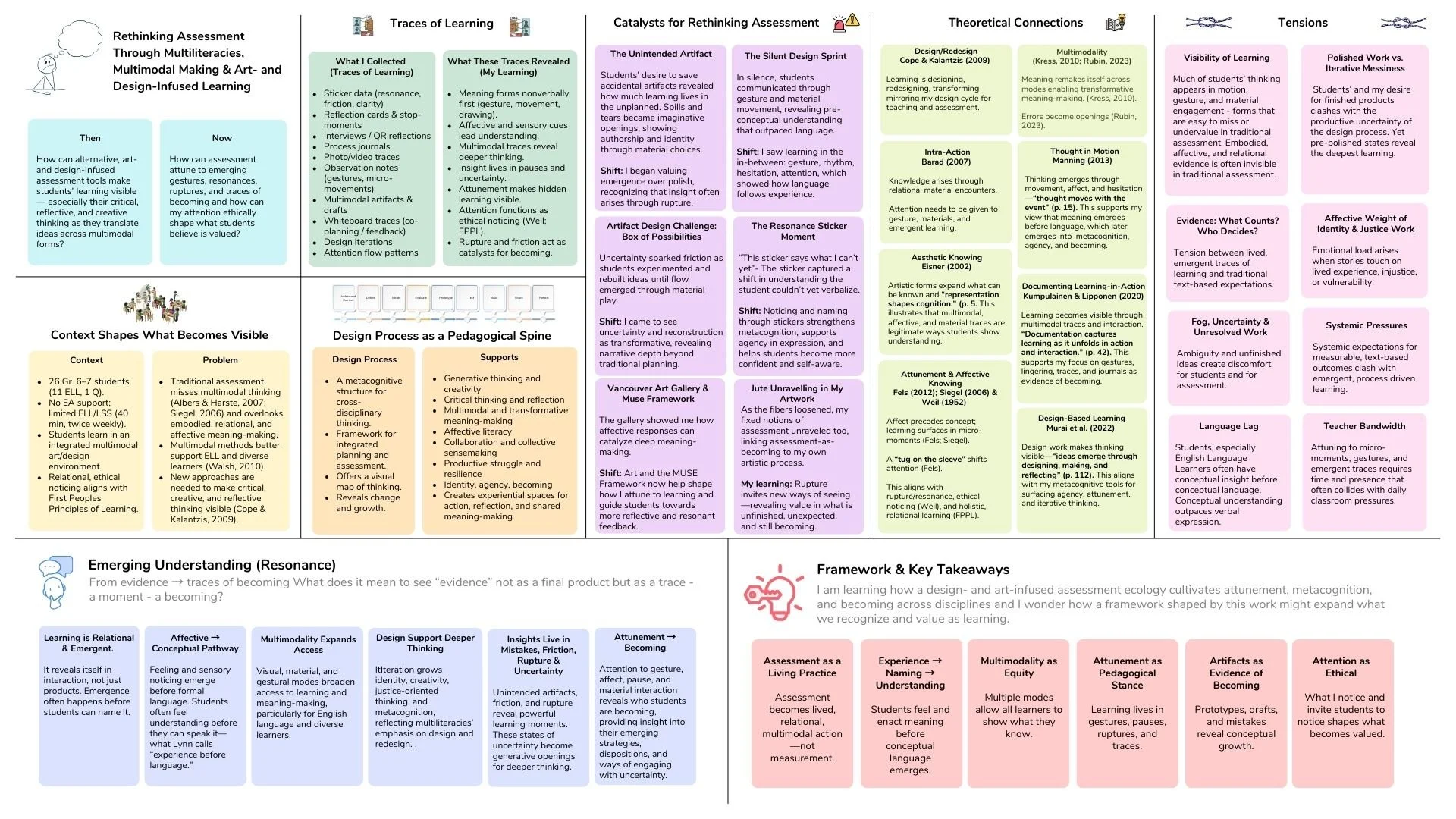
Noticing Statement
Instructor Feedback
Dear Crystal,
Insight lives in pauses and
uncertainty.
I began valuing
emergence over polish,
recognizing that insight often
arises through rupture.
I saw learning in the
in-between: gesture, rhythm,
hesitation, attention, which
showed how language
follows experience.
Experience →
Naming →
Understanding
Students feel and
enact meaning
before
conceptual
language
emerges.
Assessment as a
Living Practice
Crystal,
WOW!!! I have never seen a visual mapping that so explicitly and concretely tracks your learning journey —and to arrive at “assessment as a Living Practice” - honestly, your research is at the doctorate-level, in terms of bringing forth new understanding and practices that will be impactful for the field. I hope you are planning to write multiple articles your coming future.
Donna Barkman is the name of the doctoral student who just defended her dissertation on assessment at the university of Manitoba. She will be submitting her dissertation to their library system soon. If you type in google: Donna Barkman Dissertation University of Manitoba. Highly recommend. It’s fascinating how you’ve both re-imagined assessment.
Also you might be interested in Ming-Yu Lin’s dissertation on perfection. She explores improvisation, imperfections, and re-imagines “mistakes”. Here’s the link
I’m curious Crystal about the absence of “evaluation” and wonder how Evaluation fits into your Assessment as a Living Practice….and is there a value is defining and/or separating Assessment and Evaluation? Is there a disconnect? Or seamless journey through inquiry to a mark? Or rather what is or how does Evaluation live in your Assessment of Living Practice?
I am curious about your icons - the classic person thinking-thought bubble…and then throughout to the key in the lightbulb - you are seek to understand and open the portal of assessment…(a possible metaphorical reading). Will there be icons of bodies in action, how do you make visible that which cannot yet be said - eg. Stickers…) in a future rendition?
Just brilliant. from reading scholars to engaging your students as co-researchers to your astute analysis - being present to what is arriving—do they recognize themselves as such? (couldn’t do this deep inquiry without them!)
As you continue your research and later write up your inquiry please don't lose the Tensions and Resonances recognitions on your visual map - these tensions and resonances bring forth beautiful questions, and invite future dwelling and research.
The best research is a portal to identifying tensions, new questions, -
The impossibility and gift of educational research is that there are no perfectly tied bows at the end…like reaching the top of a mountain - the attained horizon opens to a vista of mountains yet to be explored…and hidden valleys yet to come into view.
And I have a question, how is this inquiry journey shaping who you are in action and relationship as a fellow traveller with your students?
Wonderful outstanding inquiry journey, Crystal.
Happy holidays,
With care,
Lynn
Elevator Pitch for Dr. Michael Ling & Dr. Susan Montabello
Through my research, I have learned that learning whispers before it speaks, and assessment needs to learn how to listen. In a silent gamified design challenge with my Grade 6/7 class, I saw students’ thinking emerging through gesture, hesitation, and the way their hands shaped materials. Moments of uncertainty and friction that resulted from planned obstructions became generative openings where imagination, problem-solving, and identity surfaced. These traces, which are often invisible in traditional assessment, taught me to attend differently. Now, my inquiry is exploring how noticing these embodied, multimodal moments can reshape assessment into a living, relational practice that honours who students are becoming, not just what they produce. What if the real evidence of learning lives in the traces students leave along the way?